
By Variable Resistors 2804
Difference from Fixed Resistors
Technical Details and Challenges
A variable resistor is an essential adjustment component in electronic circuits. It changes resistance through mechanical or digital methods. This helps control current and voltage precisely. Since its first use in telegraph systems in the 19th century, the design has changed. It evolved from early carbon pile structures to today's compact digital solutions. Its main advantage is real-time adjustment—for example, in audio devices, you can turn a knob to change resistance from 0Ω to 10kΩ (see Figure 1 for resistance curve). This meets dynamic use needs.
A fixed resistor uses sealed materials with a set value. A variable resistor changes effective resistance by a sliding contact (called a potentiometer) or rotating shaft. For example, the contact of a carbon film potentiometer can move up to 300° (see Table 1). This allows smooth (stepless) adjustment.
| Feature | Fixed Resistor | Variable Resistor |
| Resistance Range | Fixed Value | 0–100kΩ |
| Contact Lifetime | None | 100,000 times |
Fixed resistors offer static stability (±1% error), good for steady circuits. But variable resistors support dynamic control. For example, in motor speed control, the non-linear adjustment accuracy can be within ±5%. This works well with complex loads.
These set resistance using an I²C interface (a communication protocol). Compared to traditional ones, they offer 60% better anti-vibration performance (based on test data). They can operate up to 5 million times. This makes them suitable for harsh environments, like car electronics.
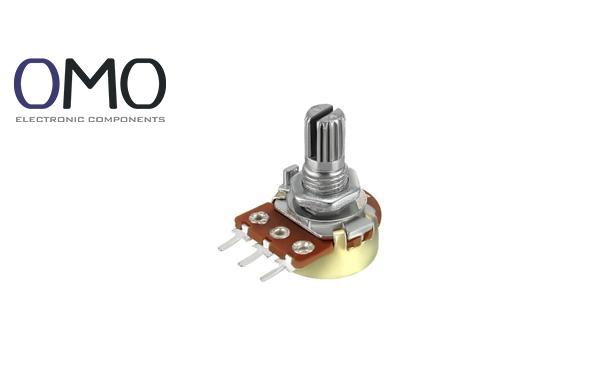
A multi-turn potentiometer can fine-tune resistance to 0.1Ω. This works well with an oscilloscope to improve circuit response in real time (see Figure 2 for waveform comparison).
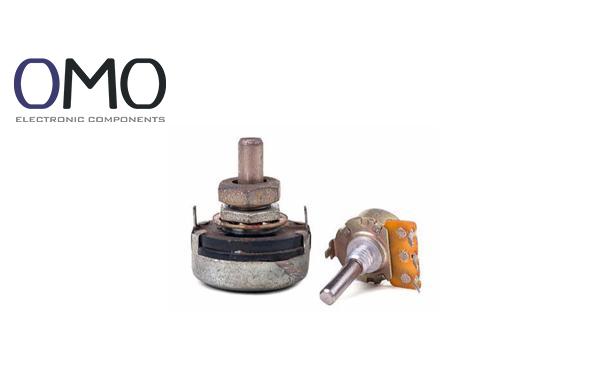
Magnetoresistive designs remove physical contact points. They last up to 10 million cycles. But the cost is 5 times higher than traditional types.
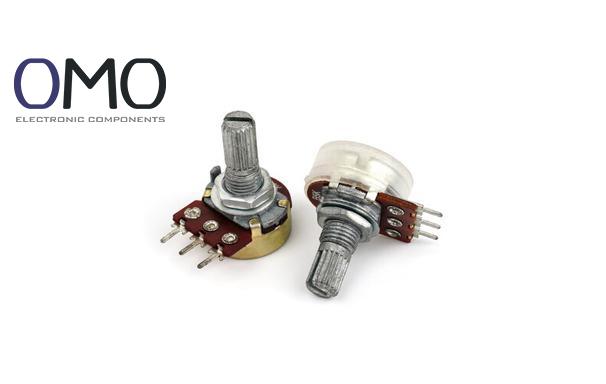
Digital potentiometers allow software-based calibration. Compared with mechanical types:
Launch the Multisim application on your computer. Navigate to the component library and type 'variable resistor' into the search field. The matching components will then appear in the results list.
Variable resistors are commonly categorized into three types: film-based, wire-wound, and potentiometers.
Begin by attaching the red probe from the multimeter to the stationary terminal of the variable resistor. Subsequently, connect the black probe to the opposing terminal. Initially, set the variable resistor to its lowest resistance setting. Progressively rotate the adjustable terminal of the potentiometer until it reaches its maximum resistance value.
Variable resistors serve numerous applications across electronic systems, encompassing functions such as electrical circuit adjustment (including volume and brightness regulation), precision instrumentation calibration, thermal compensation mechanisms, and power management operations.
Adjustable resistors in automotive applications enable drivers to fine-tune and regulate vehicle subsystems, improving operational comfort while maintaining the vehicle's peak efficiency. This dual functionality allows for personalized system customization and sustains mechanical precision during operation.