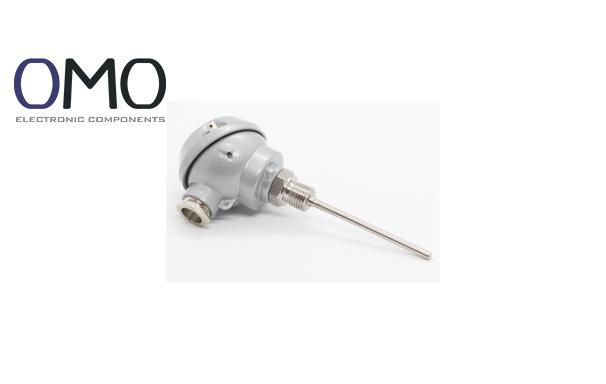
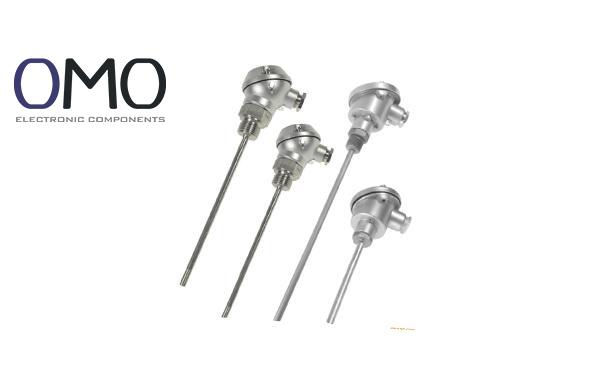
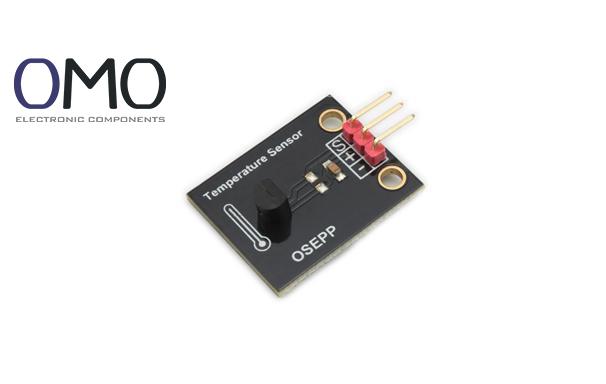
A temperature sensor is an electronic device that converts heat energy (temperature) into a measurable physical quantity (such as an electrical signal). It is a key component in measuring systems, control systems, and any situation that needs thermal management. From household appliances to aerospace technology, temperature sensors play an essential role by enabling accurate temperature sensing and control.
Main Features
The performance of a temperature sensor can be measured by several key indicators:
Measuring Range: The temperature interval that the sensor can measure accurately. For example, some models cover -200°C to 2000°C.
Accuracy: The maximum allowed difference between the sensor reading and the real temperature, usually shown as ±°C or percentage.
Response Time: The time the sensor needs to output a stable signal after detecting a temperature change. Often recorded as the time to reach 63.2% or 90% of the final value.
Stability: The ability of the sensor to keep its original performance during long-term use. This is usually shown as drift rate.
Sensitivity: The degree of signal change for each unit of temperature change. A high-sensitivity sensor can detect very small temperature changes.
Working Principle
The working principle of temperature sensors is based on changes in physical properties of materials with temperature.
Seebeck effect: Two different metals at junctions create a voltage difference when there is a temperature difference. This is the basis of thermocouples.
Resistance temperature effect: The resistance of metals or semiconductors changes with temperature. This is used in RTD (Resistance Temperature Detectors) and thermistors.
Thermal radiation effect: Objects emit infrared energy that changes with temperature. This is the basis of infrared (IR) sensors.
These principles provide many ways of measuring temperature for different applications.
Key Components
Although different types of sensors have different structures, they usually include these main parts:
Temperature sensing element: The core part whose physical property changes with temperature (e.g., the junction in a thermocouple, the platinum wire in an RTD).
Protective case or sheath: Protects the sensing element from mechanical damage, chemical corrosion, and harsh environments. Materials include stainless steel or Inconel alloy.
Connection wires or leads: Transfer signals from the sensing element to the measuring instrument or control system.
Signal conditioning circuit: Often in integrated sensors, used to amplify, linearize, and convert the raw signal for easier processing.
Types of Temperature Sensors
Temperature sensors can be divided into contact type and non-contact type.
Contact type sensors need direct contact with the measured object for heat transfer.
Non-contact type sensors measure temperature by sensing infrared radiation.
This classification directly decides the application field and performance of the sensor.
Contact Temperature Sensors
Contact sensors measure temperature through direct contact and heat conduction. They are used in most industrial and daily applications. Their accuracy depends on contact quality, heat transfer medium, and installation method.
Common contact sensors: thermocouples, RTD, thermistors, and IC (Integrated Circuit) sensors.
Thermocouples
Thermocouples work on the Seebeck effect. Two different metals at a junction produce a voltage proportional to the temperature difference.
Range: Very wide, from -200°C up to above 2000°C.
Advantages: Simple, strong, fast response, low cost.
Disadvantages: Low accuracy, need cold junction compensation, nonlinear output.
They are widely used in high-temperature fields like industrial furnaces and engine exhaust measurement.
Resistance Temperature Detectors (RTD)
RTD use pure metals (platinum, nickel, copper) whose resistance changes with temperature. The most common is platinum RTD PT100.
Advantages: High accuracy, good stability, linear output, good repeatability.
Disadvantages: More expensive than thermocouples, slower response, narrower range (-200°C to 600°C).
They are best for precise measurement in laboratories, medical, and industrial process control.
Product Tip 1: Compared with thermocouples, platinum RTDs (like PT100) provide higher accuracy and stability between -200°C and 500°C. Typical accuracy is ±0.1°C, while K-type thermocouples are usually ±1.5°C to ±2.5°C in this range.
Thermistors
Thermistors are made from metal oxide ceramics. Their resistance changes strongly with temperature.
Types:
NTC (Negative Temperature Coefficient): Resistance decreases when temperature rises.
PTC (Positive Temperature Coefficient): Resistance increases when temperature rises.
Advantages: Very sensitive, fast response, low cost.
Disadvantages: Nonlinear response, narrow range (-50°C to 150°C), aging from self-heating.
They are common in temperature compensation, over-current protection, and simple measurement.
Integrated Circuit (IC) Sensors
IC sensors combine a sensing element (often a PN junction) and signal circuits in one chip. They output analog or digital signals.
Analog type (e.g., LM35): Outputs voltage proportional to temperature.
Digital type (e.g., DS18B20): Sends data through a digital interface.
Advantages: Easy to use, linear output, no complex calibration, low cost.
Disadvantages: Narrow range (-55°C to 150°C), slow response, affected by self-heating.
They are widely used in consumer electronics and computers.
Non-contact Temperature Sensors
Non-contact sensors detect infrared radiation from an object to measure its surface temperature. They do not need direct contact.
Advantages: Measure moving, dangerous, or hard-to-reach objects. Very fast response. No interference with the object.
Disadvantages: Higher cost, affected by emissivity, distance, dust, and environment.
Infrared (IR) Sensors / Thermal Imagers
IR sensors use blackbody radiation law. They detect infrared energy to calculate surface temperature.
Single-point IR sensor: Measures temperature at one point.
Thermal imager: Creates a 2D temperature image.
Advantages: Millisecond response, safe for high temperature, no disturbance to the object.
Disadvantages: Need correct emissivity settings, affected by steam/dust, lower accuracy than contact sensors.
Functions of Temperature Sensors
The main functions are:
Monitoring: Measure and show temperature in real time, record data (e.g., lab monitoring, equipment tracking).
Control: Compare measured value with set value, trigger actions to keep temperature stable (e.g., thermostat adjusts heater power).
Compensation: Correct errors in other systems caused by temperature changes (e.g., temperature compensation in pressure sensors).
Product Tip 2: In industrial control, RTDs show better long-term stability than thermistors. RTD drift can be below 0.05°C per year, while NTC thermistors often drift 0.2°C or more. This reduces calibration and maintenance costs.
Applications of Temperature Sensors
Application Field
Example Uses
Common Sensor Types
Household Appliances
Air conditioners, refrigerators, ovens, kettles, coffee machines
From the data, RTD and thermocouples dominate in industry and high-precision fields, while NTC and IC sensors are common in consumer and general use. This reflects the balance between accuracy, cost, and reliability.
Symptoms of Sensor Failure
A faulty temperature sensor can reduce system performance or cause safety risks. Common symptoms:
Wrong or drifting readings that calibration cannot fix.
No reading at all (open circuit, short circuit, or fixed invalid values like -40°C or 0°C).
Slow response to temperature changes.
Control system failure (e.g., heating/cooling does not work or cycles too often).
Error codes in modern smart devices when abnormal signals are detected.
Product Tip 3: In high-temperature use, K-type thermocouples are more reliable than PT100 RTDs. K-type can work above 1000°C for long periods, while PT100 drifts or fails. This ensures safe monitoring of high-temperature processes.
How to Choose a Temperature Sensor
To select the right sensor, consider:
Measuring Range: Make sure the sensor covers the needed range, with 10–20% safety margin. For example, if measuring 200°C, choose a sensor with at least -50°C to 250°C range.
Accuracy and Stability: Decide based on importance. Labs may need ±0.01°C accuracy, while normal control may be fine with ±1°C. Consider long-term drift.
Response Time: Fast processes need fast sensors. Protective sheaths slow response, bare elements are faster but weaker. Airflow also affects speed.
Environment: Check vibration, humidity, corrosion, pressure, and explosion-proof needs. Hazardous areas need ATEX or IECEx certification. Corrosive areas need special alloys or coatings.
Installation: Decide mounting type (thread, flange, insertion), connector type, sheath material. Consider space and maintenance needs.
Output Signal: Match system input. Options: resistance, analog voltage/current, or digital interface (I2C, SPI). Digital sensors are easy to integrate but cost more.
Cost and Availability: Balance technical needs with cost of ownership (installation, maintenance, calibration). Check supply chain stability to avoid production problems.
Frequently Asked Questions
How to replace coolant temperature sensor?
Begin by allowing the engine to cool down completely. Next, identify the sensor, which is typically located near the thermostat housing or on the cylinder head. Disconnect its electrical connector, then gently remove the old sensor using a wrench. Install the new sensor in its place, reconnect the electrical connector, and finally start the engine to verify proper operation.
Where is the temperature sensor?
Temperature sensors are used in a range of applications, and their placement varies accordingly. In residential heating systems, the sensor is typically located within the thermostat. In automotive contexts, it can often be found along the radiator hose or inside the intake manifold, depending on the design of the vehicle.
How to test a temperature sensor?
Begin by visually inspecting the sensor for any physical damage or signs of corrosion. Then, employ a multimeter to take precise resistance or voltage readings. Finally, compare these measurements against the sensor's published specifications using known temperature references, such as ice water for 0°C.
How do I choose a temperature sensor?
When selecting a temperature sensor, key factors to evaluate include the necessary temperature range, accuracy, response time, and environmental conditions. Additionally, assess cost, installation simplicity, and compatibility with your current system.